Bogong Moths
This paper is about the extraordinary Bogong moths of Australia who navigate to caves in the mountains during the summer to avoid high temperatures

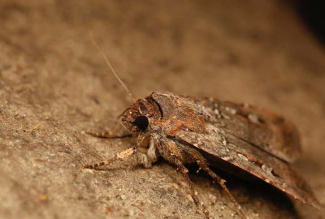
This paper is about the extraordinary Bogong moths of Australia who navigate to caves in the mountains during the summer to avoid high temperatures
In September 2015 I was asked to give a workshop at the Annual Conference of Dowsers on Animal Navigation. Of course I talked about how animals, including birds, navigate and all the outstanding questions that remain on how they do it. Those who came to my presentation were some of the best dowsers in the…
Article in Nature volume 18 number 4 April 2015 This is a very important piece of work which begins to bring us to an understanding how a sense of direction works and which is NOT magnetic based. We at animalnav.org know that this “sense of direction” must be crucial for navigation so Simon Raggett’s (one…
A recent piece of work by a team lead by A. . Kölzsch from Germany tracked a family of Greater White-fronted Goose (Anser albifrons) This goose is a great migrator and winters (December to February) in Western Europe where the researchers were helped by colleagues in the Netherlands for this study. The geese migrate in…
Intro I have put together this article to spell out some of the thinking that I have come across recently. A lot is highly contentious (such as Torsion waves) but as we struggle to understand how animals (and humans) navigate effortlessly, ideas which seemed so strong suddenly seem to be beset by impossible conditions. We…
Intro This site takes you into the world where technology is trying to understand animal migration by using tags and a sophisticated satellite system to follow routes taken by animals. Up until now tags have often been very heavy, or at least too heavy for a lot of tiny birds that make huge migrations such…