Bogong Moths
This paper is about the extraordinary Bogong moths of Australia who navigate to caves in the mountains during the summer to avoid high temperatures

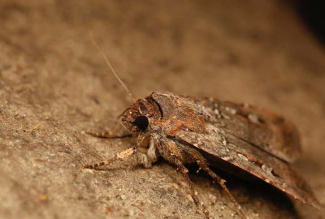
This paper is about the extraordinary Bogong moths of Australia who navigate to caves in the mountains during the summer to avoid high temperatures
Marcus Bicknell talks here about how a sense of direction is supported by clues conscious or unconscious that hone the general direction to take. My feeling is that many of us do always know which direction to go. The instinct is then supported by clues. The clues can be conscious, like observing stars, position of…
Article in Nature volume 18 number 4 April 2015 This is a very important piece of work which begins to bring us to an understanding how a sense of direction works and which is NOT magnetic based. We at animalnav.org know that this “sense of direction” must be crucial for navigation so Simon Raggett’s (one…
Showcased at the Royal Institute of Navigation is this interesting piece on animal migration. Maura O’Connor is a freelance journalist based in Brooklyn. Her first book is: “Resurrection Science: Conservation, De-Extinction and the Precarious Future of Wild Things,” from St. Martin’s Press. She is currently at work on a second book – an exploration of navigation traditions, neuroscience, and…
Ruairí McSorley who had gone swimming has been rescued after getting into difficulty while swimming off the coast of Co Kerry. He was discovered surrounded by a pod of dolphins four kilometres from the shore of Castlegregory Beach. Read the full story.
Every three years the Royal Institute of Navigation hosts a conference in the UK for everyone interested in Animal navigation. The next one is in 2016: RIN16 (Animal Navigation) 13/04/2016 12:00:00 to 15/04/2016 12:00:00 Royal Holloway College, London RIN16 Orientation & Navigation Birds, Humans & Other Animals will be the ninth International Conference on Animal…
See this link http://www.pnas.org/content/early/2013/07/17/1304459110.abstract Editor’s Comment: This piece is in line with all our thoughts that Dolphin whistles and calls are in fact the individual’s name or call sign. These ‘vocalisations’ are not language, but more like “come in No.9 I want to communicate with you”. We still believe that Dolphins actually communicate telepathically. If…